
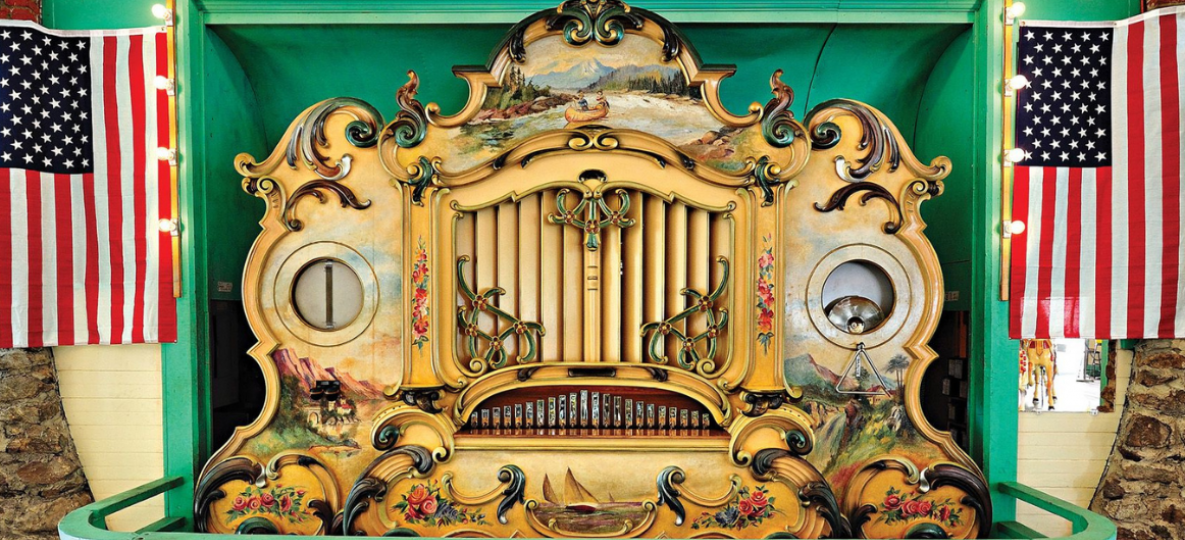
WURLITZER 165 BAND ORGAN
- "MEET THE BAND ORGAN" DATES
-
Monthly on First Sundays | 10:30am - 11am
On the first Sunday of each month during carousel season, the carousel building will open 30 minutes early to give visitors a chance to see the Park's Wurlitzer 165 Military Style band organ up close.
6/7/26 | 7/5/26 | 8/2/26 | 9/6/26
1926. Big, Better, Best Band Organ
A new organ has been installed in the carrousel.
—Evening Star, May 14, 1926
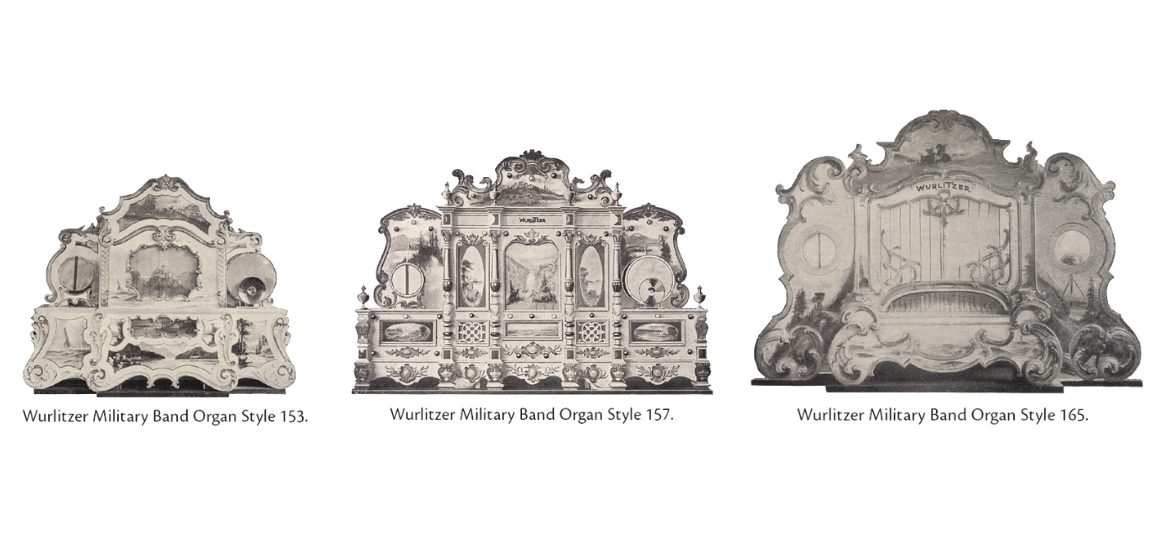
For its 1921 debut season, the Glen Echo Amusement Park Dentzel carousel was accompanied by a Wurlitzer 153 duplex orchestral organ (no. 3347), a popular style for a carousel. But L. B. Schloss, wanting something better for 1922, ordered Wurlitzer’s newest design, the 157 (no. 3440), and advertised that it played “the latest popular selections.” In terms of capability and tonality, this was a considerable upgrade. Four years later, in 1926, a still larger band organ arrived—the Wurlitzer 165 (no. 3779) that still provides the marches and waltzes enjoyed while riding the carousel today.
- WURLITZER 153, 157 & 165
-
Since 1971. Restoring and Maintaining the 165 Organ
To do justice to the historical significance and musical capabilities of the organ, [the conversion] should all be done at one time.
—Durward R. Center, Conversion Proposal, November 25, 1974
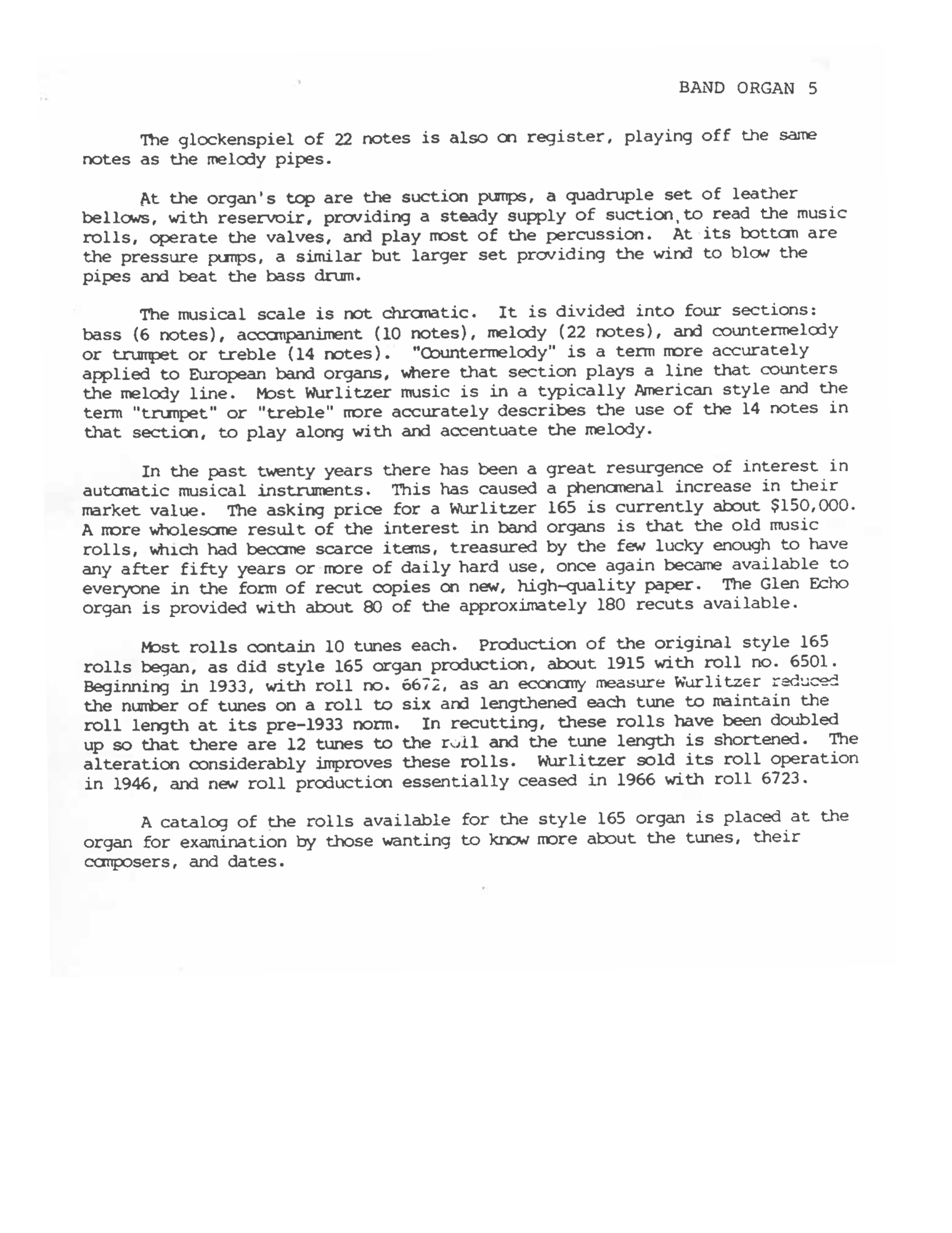
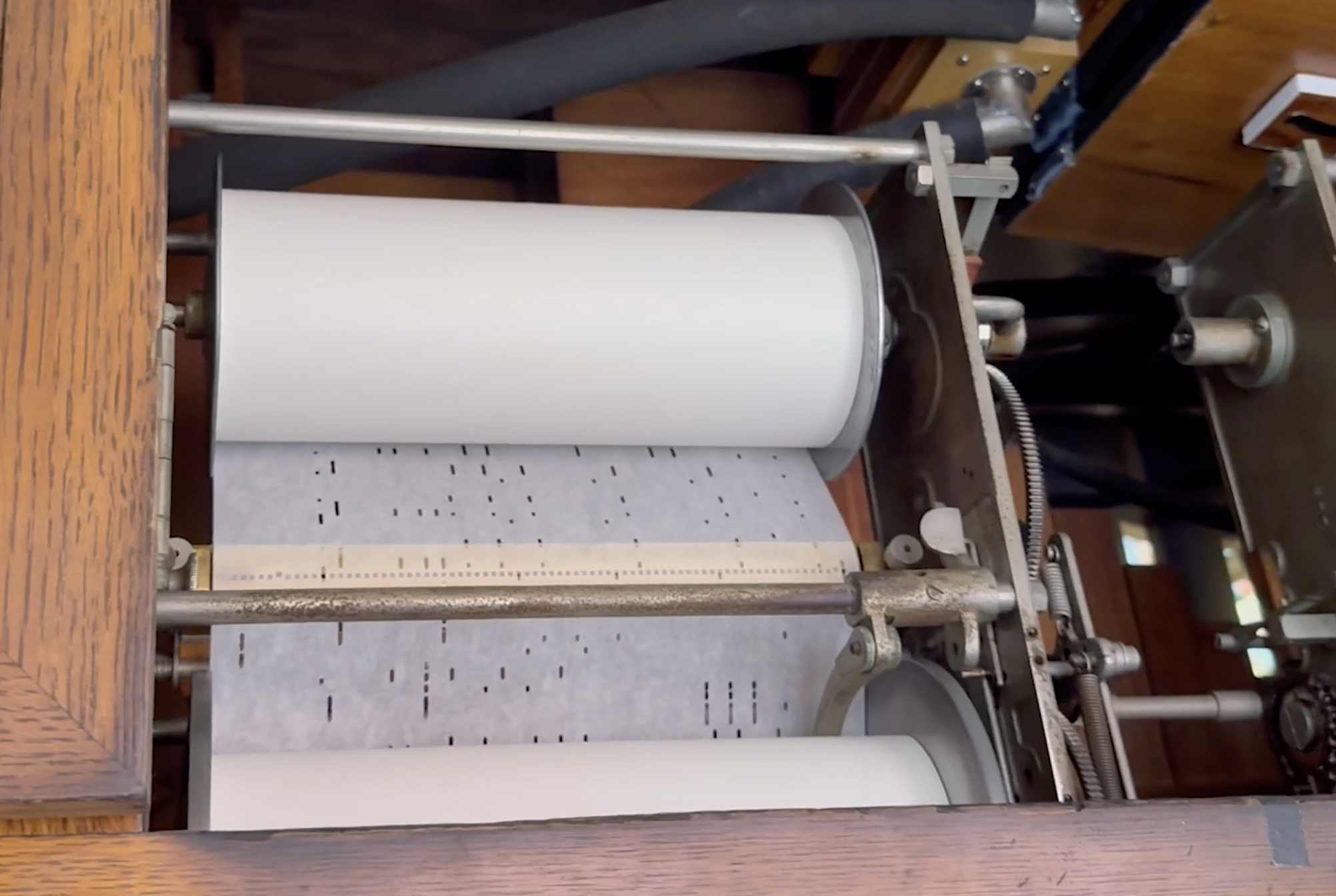
Of the 11 known Wurlitzer 165 band organs, Glen Echo’s is considered by many to sound the finest. That couldn’t be said in 1971, when Durward Center, newly arrived in Washington to work with the Smithsonian’s mechanical musical instruments, first heard it. In 1934, the organ was converted to play the more common chromatic Caliola rolls. The 165 is not chromatic, so pipes were changed to cover the chromatic upper range, but some notes, notably in the bass, were missing. The triangle and castanets had also been removed. Moreover, the 165 organ’s multiple voices for melodies and counter-melodies weren't being utilized. In 1978, after numerous discussions, the National Park Service contracted with Center to convert the Wurlitzer 165 back to its original configuration. Ever since, Center has done regular check-ups, repairs as needed, and seasonal tuning. Rosa Patton restored the façade to its original designs in 1994. A revival of interest in cutting 165-style rolls has given the organ a wide selection of arrangements to display its full musical virtuosity.
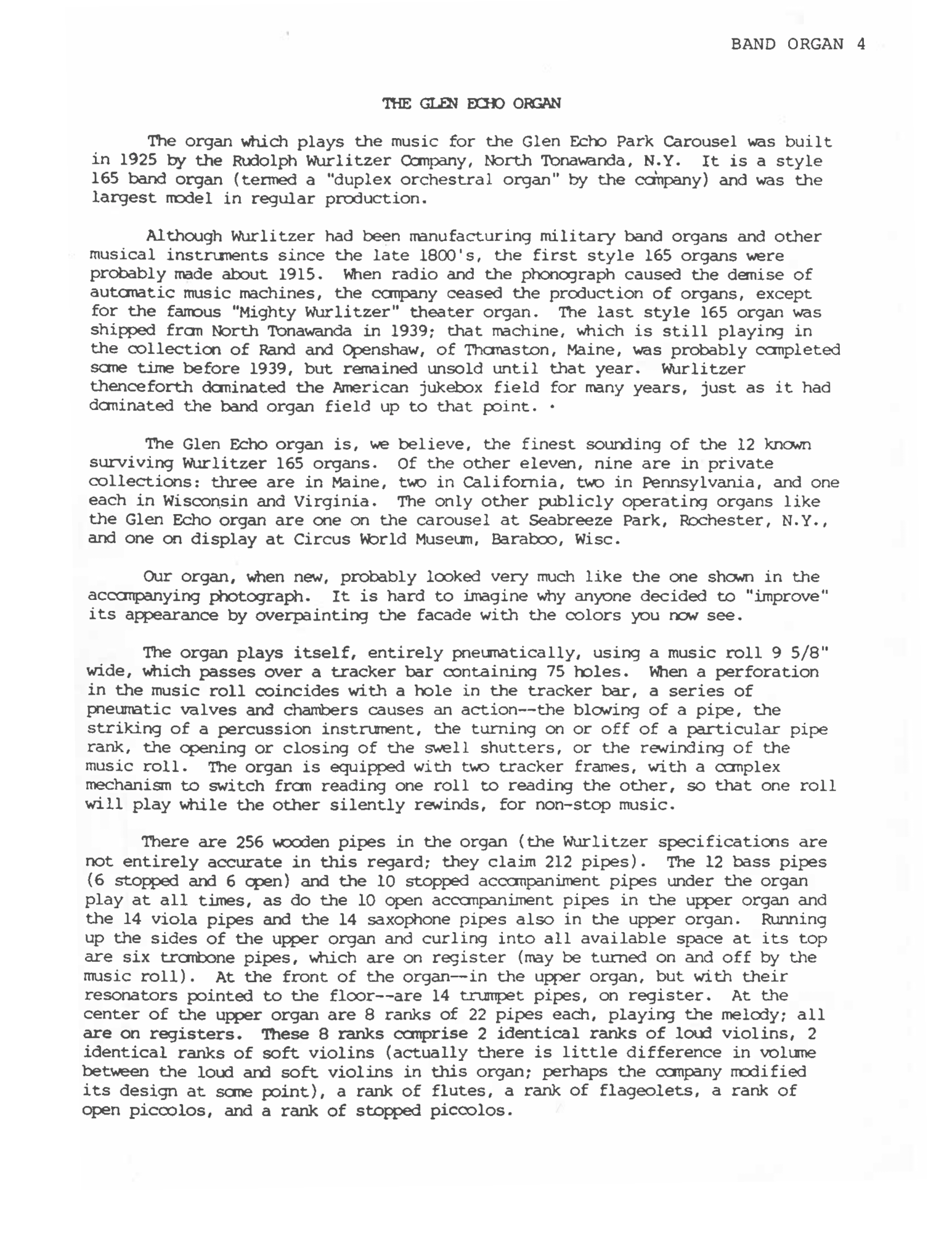
- DESCRIPTION OF GLEN ECHO PARK BAND ORGAN FROM CAROUSEL MANUAL
-
How Many Tunes Can the Band Organ Play??
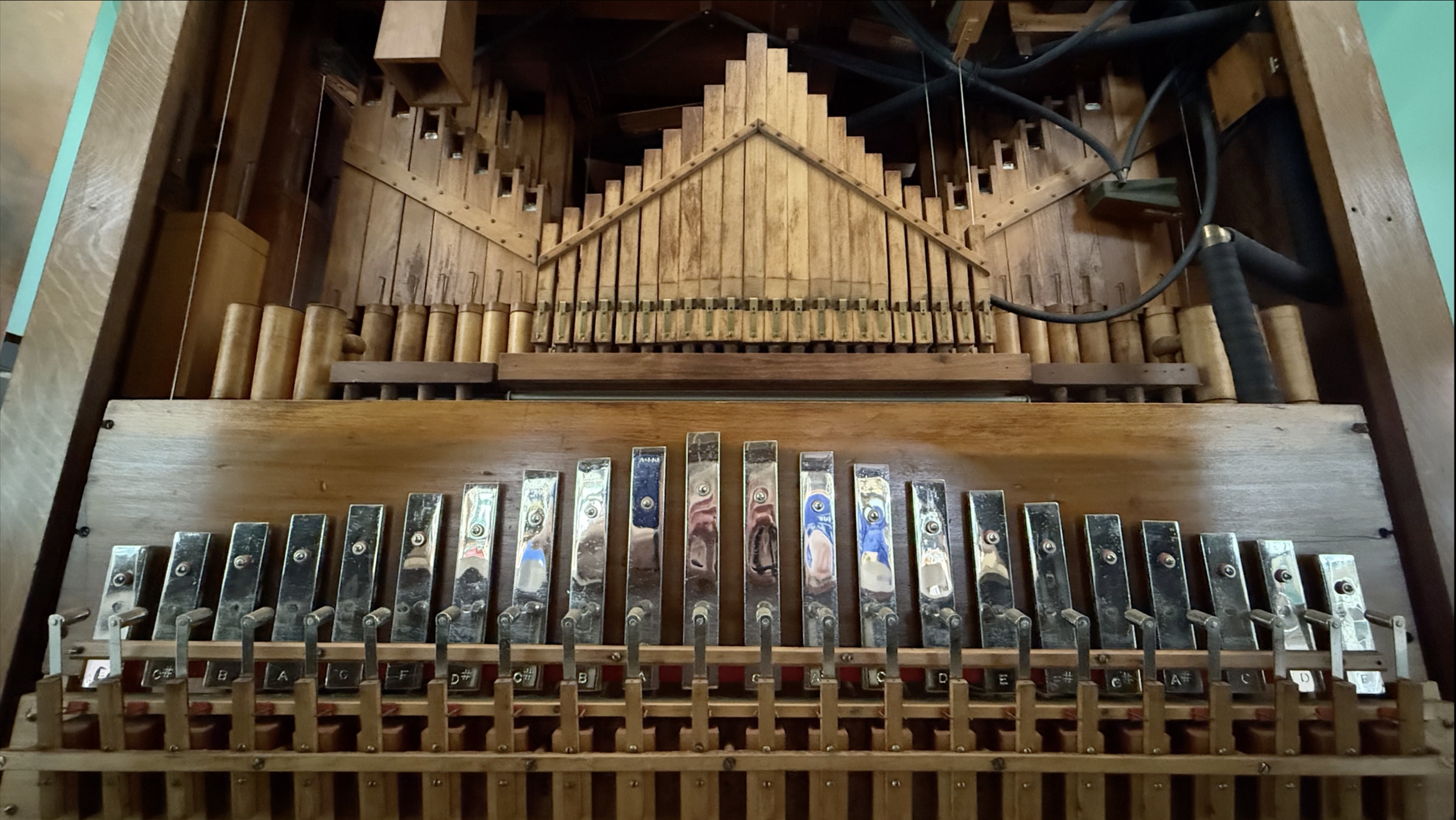
The band organ plays its music from perforated paper rolls. Two rolls can be set up to play sequentially on its duplex tracker system, so the music never stops. The collection has more than 200 rolls, with a total of over 1900 musical arrangements.
View or Download the Roll Catalog
- BROWSE THE BAND ORGAN ROLL CATALOG
-
For best viewing, click the full screen icon (
 ) in the bottom right corner of the catalog screen (or in the middle of the screen if you are on a mobile device). You may download the catalog by clicking the download icon in the bottom right corner. Use the < > icons to turn the page.
 - BAND ORGAN PIPES
-
- BAND ORGAN ROLL
-
- 165 STYLE BAND ORGAN ROLL DIAGRAM
-
Band Organ in the News
"Glen Echo Park’s organ is one hundred. The man keeping it working says it has a lot more music to play" | WAMU | July 17, 2026 | Listen or read here >>
"From Gala to Summer Season: Celebrating Two Centennials at Glen Echo Park" | Bethesda Magazine | April 16, 2026 | Read it here >>
1921 Dentzel carousel at Glen Echo Park
- DENTZEL CAROUSEL
-
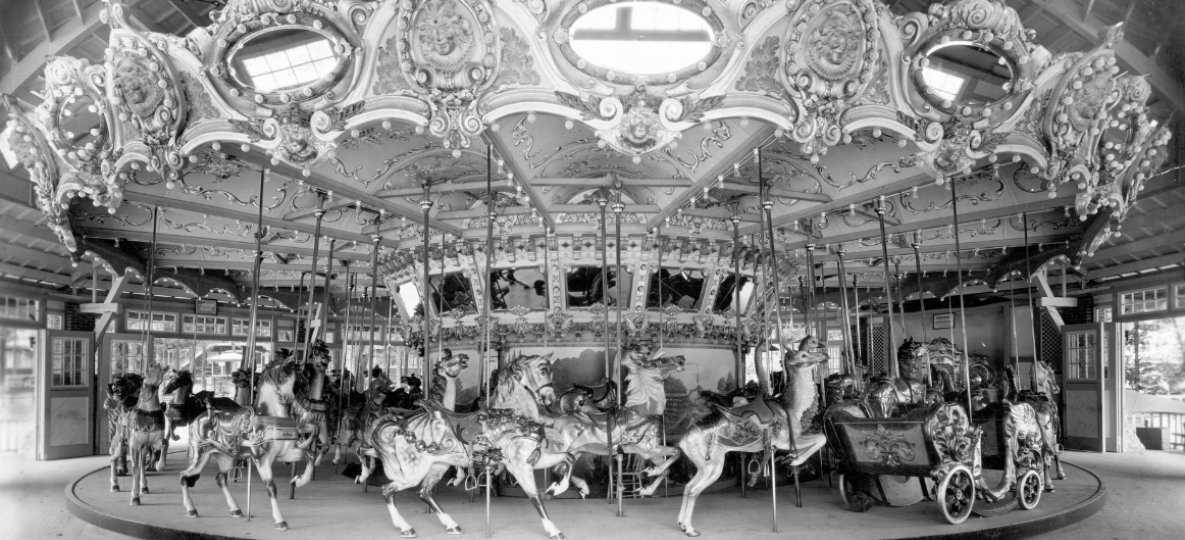
Please join us for a ride on one of the greater Washington area’s true treasures! Installed at Glen Echo Park in 1921, the canopy and the carved figures were made by the Dentzel Carousel Company of Germantown, Pennsylvania. It is a classic example of hand woodcarving popular during the early 1900s. From 1983 through 2003, the entire carousel was fully restored. The carousel is listed on the National Register of Historic Places.
2026 HOURS OF OPERATION
May 2 - August 30:
Wednesday, Thursday & Friday || 10am – 2pm (closed Monday & Tuesday)
Saturday & Sunday || 11am – 5pm
August 31 - September 27:
Saturday & Sunday || 11am – 5pm (closed weekdays)
Also open on these holidays:
Memorial Day — Monday, May 25 || 11am – 5pm
Labor Day — Monday, September 7 || 11am – 5pm
CLOSED July 4
- CAROUSEL HISTORY
-
Installed in 1921 by the Dentzel Carousel Company of Germantown, Pennsylvania, the Glen Echo Park carousel is one of only 135 functioning antique carousels in the country and one of the few still in its original location. Listed on the National Register of Historic Places, the carousel is truly a Washington area treasure! Known as a “menagerie carousel” because of the variety of its animals, the Glen Echo Park carousel includes 52 carved figures, including: 40 horses, 4 rabbits, 4 ostriches, 1 giraffe, 1 deer, 1 lion and 1 tiger. It also features two circus chariots. With its playful animals and striking ornamentation, the carousel has been an iconic symbol of the Park throughout the site's amusement park years and into its current phase as an arts and cultural center for the past half-century.
In the summer of 1960, Howard University students led protests at the Glen Echo Amusement Park along with local residents. The students rode the carousel and were arrested for doing so in violation of the privately-owned amusement park’s segregation policies. The case went all the way to the United States Supreme Court. Their continued protests under the heat of the summer sun – and the active engagement of community members in the fight – led to the amusement park's desegregation, opening the venue to everyone for its 1961 season and beyond.
Today, the carousel is the only remaining historic ride from the amusement park era at Glen Echo Park. It is ridden by more than 50,000 people each year – including multi-generations of families visiting the Park. In 2021, the carousel celebrated its 100th Anniversary in the Park. Find information on the Carousel 100th Anniversary Celebration here.
Want to learn more about the band organ? Check out this lecture from our Carousel 100th Anniversary lecture series! Durward Center, the restorer and caretaker of the organ for the past 50+ years talks about the history of the organ at the Park, its modifications, restoration and maintenance. Watch the video >>
 Facebook
 YouTube
 Instagram
 LinkedIn